Understanding Volcanoes: Principal Types and Eruptive Mechanisms
Volcanoes are primary geological features that act as vents for Earth's internal heat. They occur where magma—molten rock from the mantle and lower crust—breaches the surface. The specific morphology and eruptive behavior of a volcano are dictated by tectonic setting, magma chemistry, and the volume of expelled material. By studying these variables, geologists categorize volcanoes into several distinct structural types, each with a unique lifecycle and eruptive profile.
The Principal Volcano Types
1. Stratovolcanoes (Composite Volcanoes)
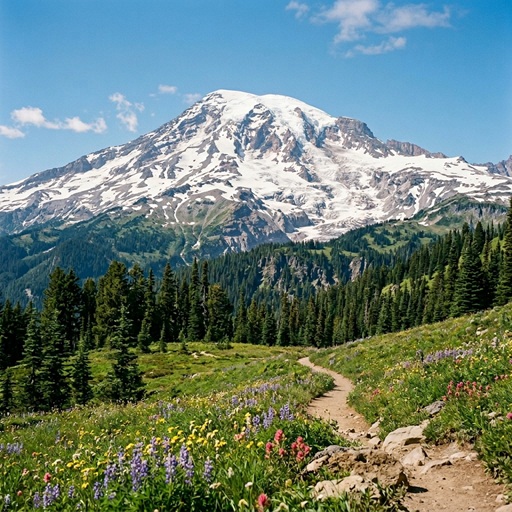
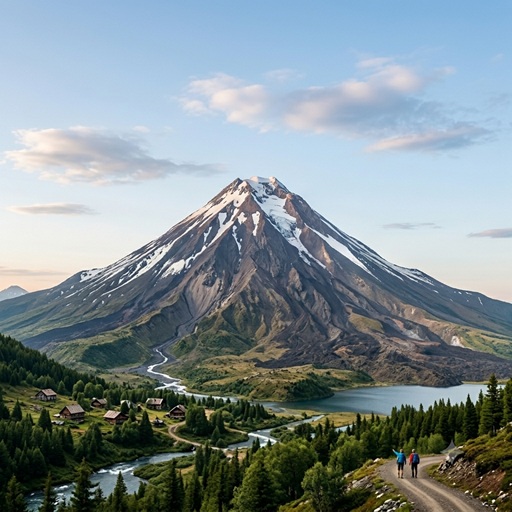
Stratovolcanoes are characterized by their classic, steep-sided, symmetrical cones. They are termed "composite" because they are constructed from alternating layers (strata) of solidified lava flows, volcanic ash, pumice, and tephra.
These volcanoes typically form above subduction zones, where one tectonic plate is forced beneath another. The magma associated with stratovolcanoes is generally intermediate to felsic (like andesite or dacite), possessing a relatively high silica content. High silica increases magma viscosity, making it thick and resistant to flow. This viscosity traps dissolved gases, causing pressure to build until it is released in highly explosive eruptions.
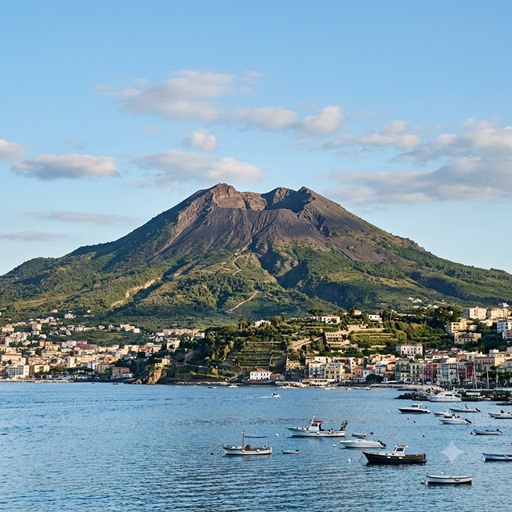
However, some stratovolcanoes exhibit complex, mixed behaviors. Mount Etna in Italy, for example, is a prominent stratovolcano that demonstrates both effusive lava flows (resulting from lower-viscosity, basaltic-to-trachybasaltic magma) and explosive, ash-producing summit eruptions. This continuous layering of diverse eruptive materials over hundreds of thousands of years builds the massive composite edifice.
2. Shield Volcanoes
In contrast to the steep peaks of stratovolcanoes, shield volcanoes possess broad, gently sloping profiles resembling a warrior's shield resting on the ground. They are formed almost entirely by the accumulation of fluid basaltic lava flows.
Because basaltic magma is poor in silica, it has low viscosity. When it reaches the surface, gases escape easily without generating massive explosions, and the lava can travel great distances before cooling and solidifying. Shield volcanoes frequently form over mantle plumes (hotspots) or divergent boundaries, largely independent of convergent tectonic plates. Mauna Loa in Hawaii is the archetypal shield volcano, characterized by steady, effusive eruptions that slowly build massive, expansive structures over time.
3. Cinder Cones (Scoria Cones)
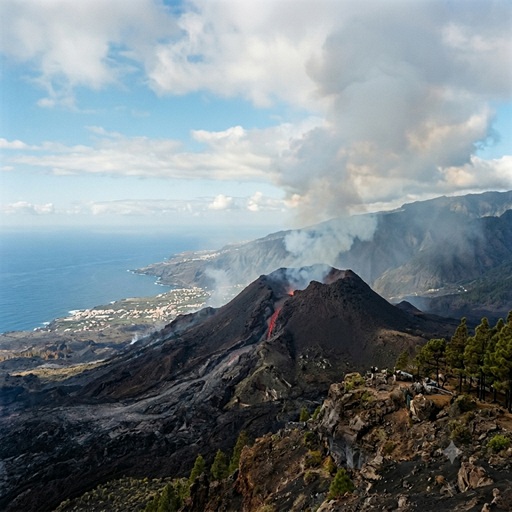
Cinder cones are the most common and structurally simple type of volcano. They are relatively small, rarely exceeding a few hundred meters in height, and feature a distinct bowl-shaped crater at the summit.
These cones are built from particles and blobs of congealed lava ejected from a single vent. As gas-charged lava is blown violently into the air, it breaks into small fragments that solidify and fall as cinders (scoria) around the vent, forming a steep, symmetrical mound. Unlike stratovolcanoes, which experience multiple eruptive phases over millennia, cinder cones are often monogenetic—meaning they are the product of a single, continuous eruptive episode that may last weeks to years, after which the specific vent becomes permanently inactive. Parícutin in Mexico is a classic example of a cinder cone.
4. Lava Domes
Lava domes are formed by relatively small, bulbous masses of lava that are too viscous to flow any significant distance. Consequently, on extrusion, the lava piles over and around its vent. A dome grows largely by expansion from within.
The magma forming these domes is typically highly silicic (dacite or rhyolite). As the dome grows, its outer surface cools and hardens, then shatters, spilling loose fragments down its sides. Lava domes commonly occur within the craters or on the flanks of large stratovolcanoes following major explosive eruptions, acting as a slow extrusion of the remaining degassed magma.
The Governing Mechanics: Viscosity and Volatiles
To understand why these distinct types exist, it is necessary to look at the chemistry of the magma, specifically viscosity and volatiles (dissolved gases).
- Viscosity is largely controlled by silica content. Silica molecules form strong bonds that resist flow. Basaltic magmas (about 50% silica) are fluid, allowing gases to expand and escape peacefully, leading to effusive shield volcanoes. Felsic magmas (over 65% silica) are exceptionally thick, trapping gases and leading to explosive pressure constraints.
- Volatiles (primarily water vapor and carbon dioxide) act as the eruptive propellant. As magma rises toward the surface and confining pressure decreases, these gases exsolve into bubbles. If the magma is viscous, the bubbles cannot easily escape. Internal pressure eventually exceeds the tensile strength of the surrounding rock and magma, resulting in explosive fragmentation.
Conclusion
Volcanoes are dynamic systems dictated by the precise chemical and tectonic conditions of their environment. From the steady, fluid basaltic outpourings of shield volcanoes to the complex pressure cycles of stratovolcanoes, these structures act as vital pressure-relief mechanisms for the planet's interior. Through rigorous seismic monitoring and geochemical analysis, earth scientists continue to refine our understanding of these foundational geological forces.